Building the family’s dream house is very important, and when it comes to creating spaces that meet the needs of each family member, it’s not something you should overlook. Balancing aesthetics and functionality is even more important when designing for children, as it is for parents. A kid-friendly home design isn’t all about brightly colored paint and trinkets and frills; it’s about planning in a way that will allow the family to create a space that is conducive to play and learning.
In this article, we will talk about some of the main features that need to be taken into account while designing spaces for children not only to look good, but also to foster their mental and physical development.
Versatile Furniture for Dynamic Space
Versatile and durable kids’ furniture is the key to any kid-friendly home design. Opt for furnishings that can adapt to the changing needs of your child as they grow. Modular furniture can be used for tables, chairs, and even cribs and can be easily adjusted to suit the age and activity. By investing in high-quality items that last, it is possible to avoid having to replace them often.
Interactive Zones for Playful Learning
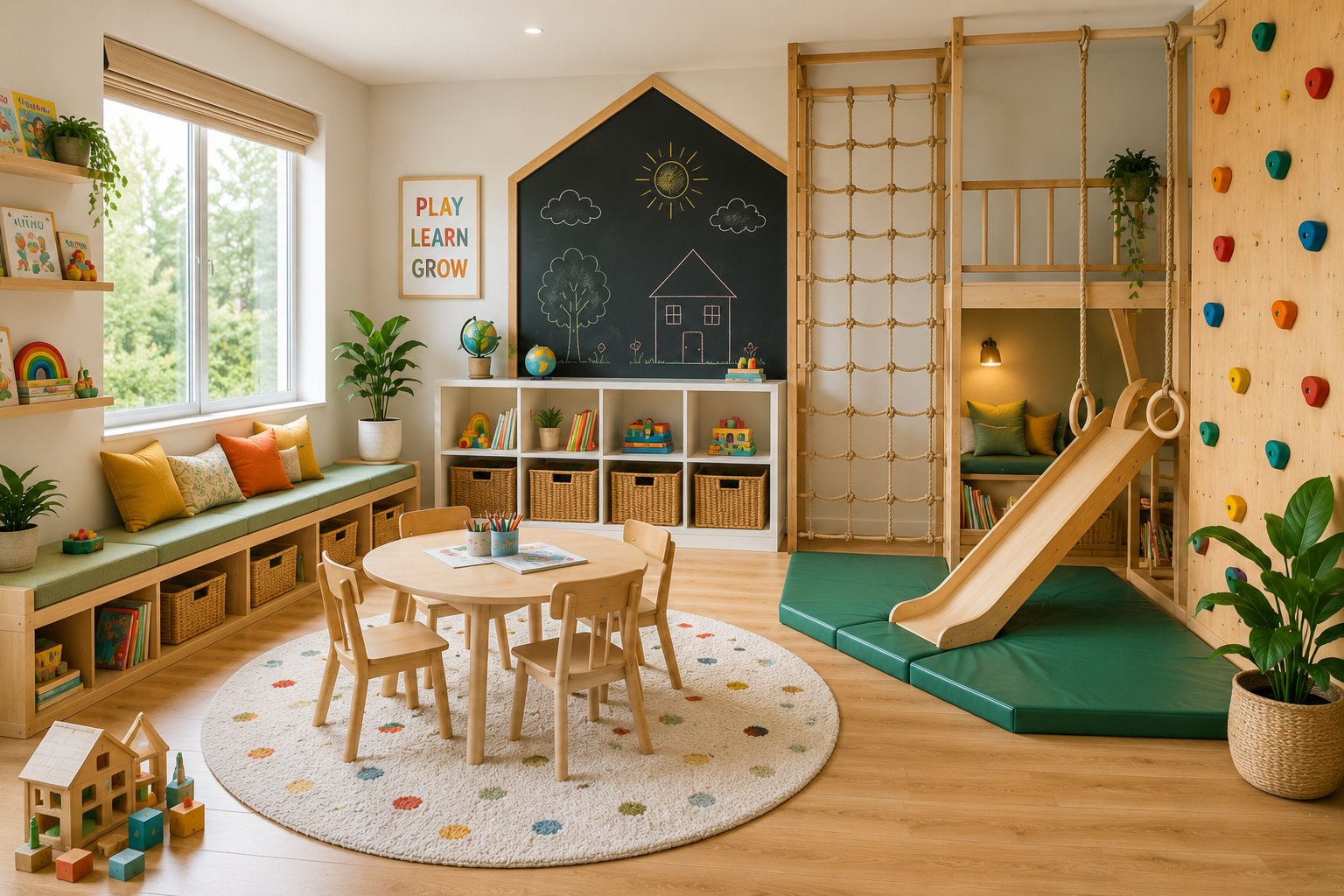
Identify learning spaces in the house. Provide a warm reading area with a small collection of books that are appropriate for their age, or a small art centre that has readily available art equipment. These zones not only foster creativity but also make them love the learning process from an early age. Use educational posters or wall art to create a learning environment.
Developing a style-savvy and child-proof home.
The safety of children should be the number one concern in any children-friendly home. Beyond traditional safety measures, such as securing cabinets and outlets, consider ways of seamlessly integrating safety features into your design. Rounded furniture and slip-resistant flooring can minimize the risk of accidents when kids are running amok around the house. Get creative and consider safety gates or barriers that don’t detract from the overall aesthetic of the space.
Storage Solutions to Tame Ever-Growing Toys
All parents can relate to the challenge of toy overload. One of the most important considerations when designing a home for your kids is to make the most of space so that you can avoid clutter. Use plastic storage bins and baskets in vibrant colors so that children can easily organize and get to their items without needing to help themselves. This will help to educate them on the importance of responsibility and keep their environment clean and aesthetically pleasing.
Incorporating Nature Indoors
Children are very sensitive to the influence of nature on their health and growth. Embrace the outdoors in your home by using plants or natural elements in interior design. Try making a small indoor garden or creating a mural inspired by nature. These additions not only add a touch of beauty to the area but also create a soothing and nurturing environment for children to flourish.
Encouraging creativity and concentration using color
The color palette for a kid’s room is very important, even in the home. Colors can be used to invigorate and stimulate creativity; however, balance is important. Use a visually pleasing, but not overpowering, color palette. To create a harmonious and balanced space that promotes concentration and creativity, try using a combination of calming pastels and bright accents.
Finding the right balance between screen time and playtime
In this era dominated by technology, try striking a balance between screen time and playtime. Use technology wisely by setting up specific learning apps or interactive learning game spaces. Furthermore, the need for physical play and outdoor activity should be emphasized to promote children’s overall development.
Use Spaces to suit Personal preference
Let your child create their own design to help them feel part of it and make it their own. Allow them to choose colors for their room, select decor elements, or even contribute to DIY projects. Personalised spaces bring a sense of pride and comfort to the room, making it truly their own.
Kid-Friendly Home Design
A child-friendly home is a conscious mixture of creativity, functionality, and safety. With multifunctional furniture, engaging learning spaces, safety features, storage solutions, nature, flexible color schemes, blending technology, and personalized touches, you can make it a place where your children can learn and grow.
Make sure your home builder installs these features prior to a growing family. This information can help you develop areas that will meet your children’s current needs and support their overall development. Finally, a good child-focused environment grows with children and sets the course for a happy, healthy, and enriching childhood.